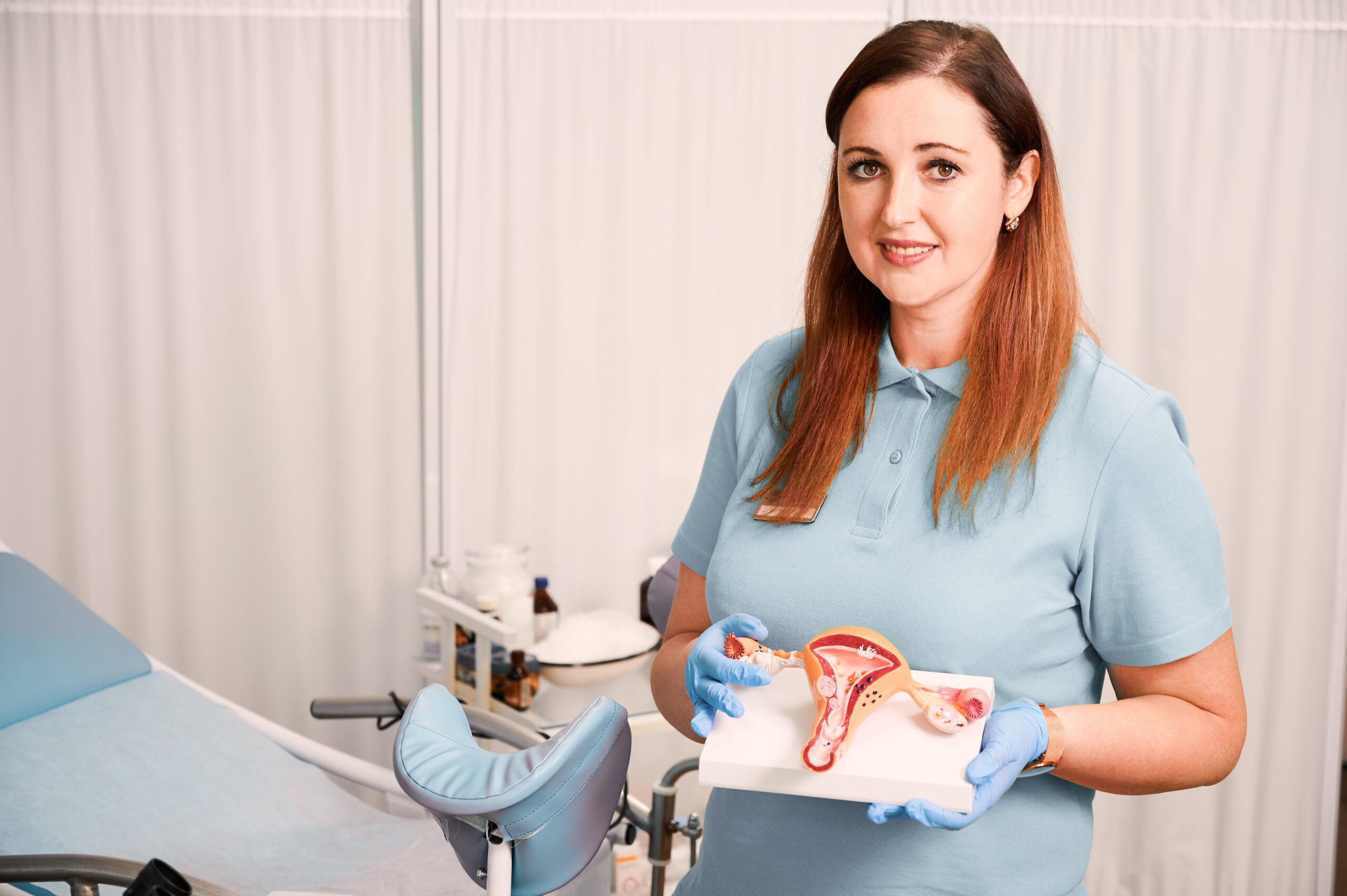
Your sonography report says “ovarian cyst.” Now your mind is running in ten directions. Is it serious? Will I need an operation? Will it stop me from having a baby?
Take a breath. Most ovarian cysts are harmless. And when treatment is really needed, laparoscopy has made it far easier than it used to be.
What Is an Ovarian Cyst?
A cyst is simply a small sac filled with fluid that develops on or under an ovary.
Many women get them every month without even knowing. These are called functional cysts. They come with the monthly cycle and go away on their own in two or three months.
Some cysts are different. Chocolate cysts (endometriosis), dermoid cysts, and cysts linked to PCOD may persist, grow, or cause trouble.
Signs You Should Not Ignore
Small cysts usually stay silent. But meet your gynaecologist if you notice:
- Pain or heaviness in the lower stomach
- Period pain that keeps getting worse
- Irregular or very heavy bleeding
- Bloating, or a feeling of fullness after eating very little
- Pain during intercourse
- Difficulty in getting pregnant
- Sudden, sharp pain with vomiting, which needs emergency care
When Does a Cyst Need Surgery?
Not every cyst goes to the operating theatre. Your doctor will first watch it with sonography and a few blood tests.
Surgery is usually advised when:
- The cyst is bigger than 5 cm and not reducing
- It has not gone away even after three months
- The scan shows a solid or complex cyst
- It is causing constant pain
- It has twisted or burst
- It is coming in the way of pregnancy
- There is any doubt about cancer
What Is Laparoscopic Treatment?
Laparoscopy is keyhole surgery. The surgeon makes two or three tiny cuts on the tummy, each about the size of a shirt button.
A thin camera goes inside and throws a large, clear picture on a screen. Using fine instruments, the surgeon removes only the cyst and leaves the healthy ovary untouched. This is called laparoscopic ovarian cystectomy.
The total system takes about 30 to 60 minutes. It is done under anaesthesia, so you feel nothing during the operation. The tiny cuts are closed with one or two small stitches.
Why Doctors Prefer Keyhole Surgery
Open surgery is still needed in a few cases. But for most ovarian cysts, keyhole surgery is now the first choice, and here is why:
- Very small cuts, so the scars fade away
- Less pain and much less blood loss
- Lower risk of wound infection
- Most women go home within a day
- Back to normal work in one to two weeks
- Fewer internal adhesions, which protects fertility
Will It Affect My Fertility?
This is the question almost every young woman asks first.
The good news is that it is quite reassuring. A professional surgeon will ensure that the removal procedure targets only the cyst lining and preserves all the normal ovarian tissue surrounding it. Your follicle reserve is safe. Even when dealing with both ovaries, the objective is the same.
In many cases, fertility actually improves after the cyst is removed, especially with chocolate cysts, which reduce the chance of conceiving when left alone.
Recovery Is Easier Than You Think
Walk a little on the same evening. Eat light food. Drink plenty of water. You will need to skip heavy workouts and lifting for 6 weeks. Mild shoulder pain for a day or two is normal. It comes from the gas used during the surgery.
Call your doctor if you get a fever, heavy bleeding, or pain that keeps increasing.
And do not skip the follow-up visit. Your doctor will review the biopsy report and advise you on preventing new cysts.
Do Not Live With the Worry
An ovarian cyst is common. Ignoring it is the only real mistake.
At Dr Avhad Hospital, Nashik, our advanced laparoscopic centre treats ovarian cysts with a fertility-first approach, and the team explains every step in a language you understand.
Get the scan. Ask your questions. Then decide calmly.