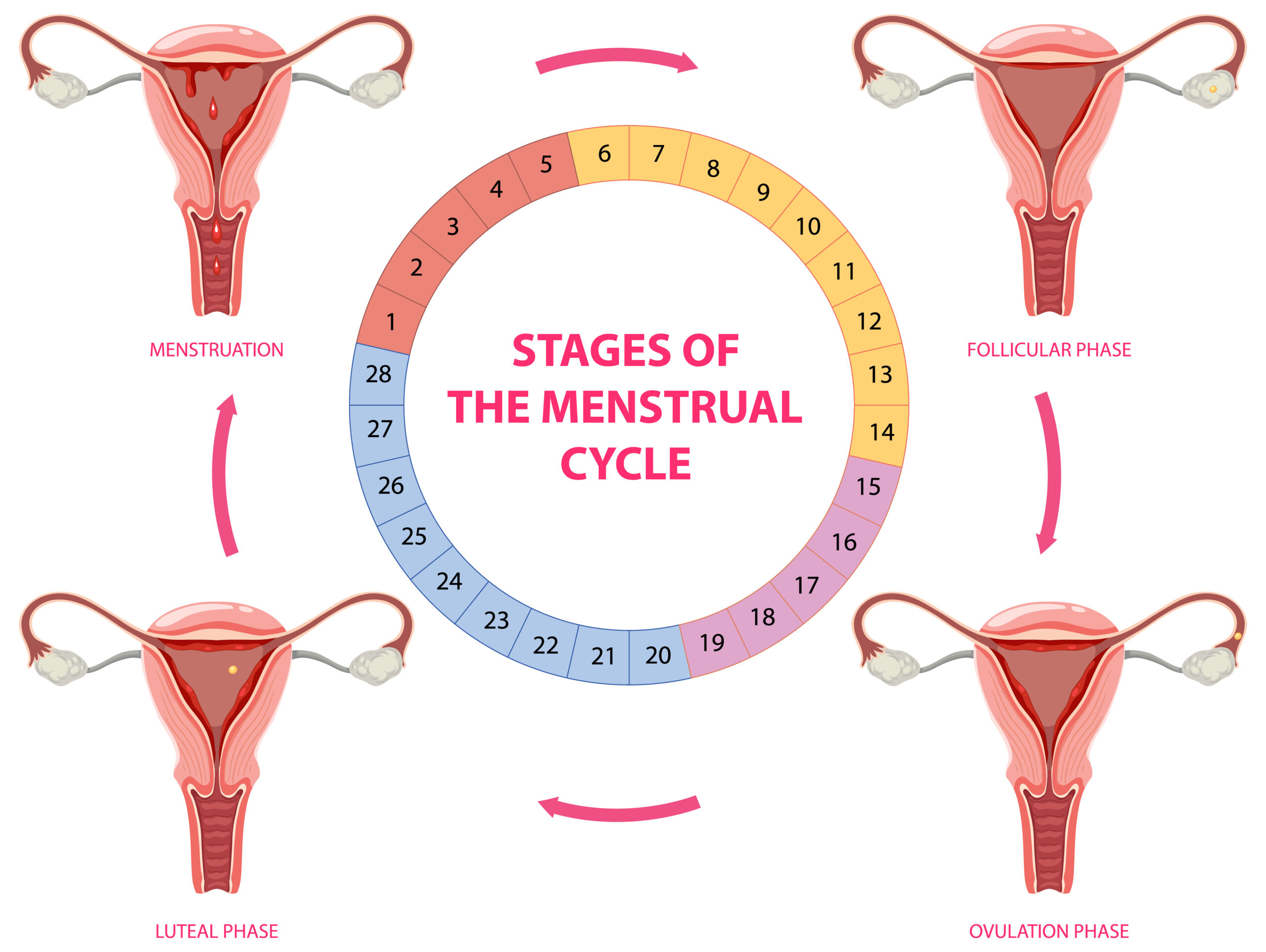
Your body follows a monthly cycle every single month. This cycle is called the menstrual cycle. It has four stages that work together beautifully. Understanding these stages helps you better understand your body.
Many people find this cycle confusing at first. But it is actually simple to understand. Let us break it down in clear, easy words. Each stage has a specific job to do.
Stage 1: Menstruation (Days 1–5)
This is the stage most people already know. It is when your period begins each month. Your uterus sheds its inner lining during this time. This happens because no pregnancy occurred last cycle.
- The shed lining leaves your body as period blood.
- You may feel cramps, bloating, or low energy.
- Mood changes during this phase are very common.
- Bleeding usually lasts between three and seven days.
Your period marks day one of your new cycle. Rest, stay hydrated, and be kind to yourself now. Heating pads can help ease the cramps you feel. Every woman’s period looks and feels a little different. That is completely normal and nothing to worry about.
Stage 2: The Follicular Phase (Days 1–13)
This stage begins on day one, together with your menstrual flow. The process continues even when your flow has completely ended. Your brain releases hormones that reach your ovaries. These hormones give instructions to your ovaries to develop an egg.
Tiny structures filled with fluid called follicles begin to grow. One egg is present in each follicle. However, only one follicle will be selected to become mature. The chosen follicle secretes estrogen hormones in your body.
Estrogen is responsible for regenerating and thickening your uterine wall. During this stage, you will have lots of energy and your mood will improve. You will feel more alert, active, and energized.
Stage 3: Ovulation (Around Day 14)
This is the most critical period during which pregnancy is achieved. During this phase, your body releases the mature egg from the follicle. It moves slowly through the fallopian tube. This process takes place for approximately 24 hours. Sperm can survive in the body for 5 days. Therefore, your fertility period lasts about six days.
You will experience watery, stretchy vaginal discharge during this period. Some women may experience discomfort on one side of their pelvis due to ovulation. This discomfort is commonly called ovulation pain. Your body temperature usually rises when you ovulate. Observing your body temperature will help you monitor your fertile periods.
Stage 4: The Luteal Phase (Days 15–28)
After ovulation, your body enters the luteal phase. The empty follicle transforms into something called the corpus luteum. It begins releasing a hormone called progesterone. Progesterone supports pregnancy by thickening your uterine lining. If a fertilized egg implants, your pregnancy journey begins. If there are no egg implants, the corpus luteum slowly shrinks.
Progesterone and estrogen levels both drop around this time. This hormonal drop triggers those familiar premenstrual symptoms. You may feel bloated, tired, irritable, or emotional. Tender breasts and food cravings are also very common.
These are all normal signs of your luteal phase. Your period then arrives, and the whole cycle repeats. This phase can last 12 to 14 days.
Why Understanding Your Cycle Truly Matters?
Your menstrual cycle is a real sign of health. Changes in your cycle can signal something worth noting. Irregular periods may sometimes point to conditions like PCOS. Painful cycles could also point to conditions like endometriosis.
Track your cycle to better understand your bodily functions. It also helps you plan for future pregnancies. There are many free apps available to track your cycle. If your cycle feels off, speak to a doctor. Your body sends you signals — always listen to them. A healthy, regular cycle is a healthy, happy you.